Conversation auditing vs call monitoring: coach, don’t police
Call monitoring spots errors; conversation auditing finds patterns. Learn what to audit, how to coach from the results and how AI audits every call.
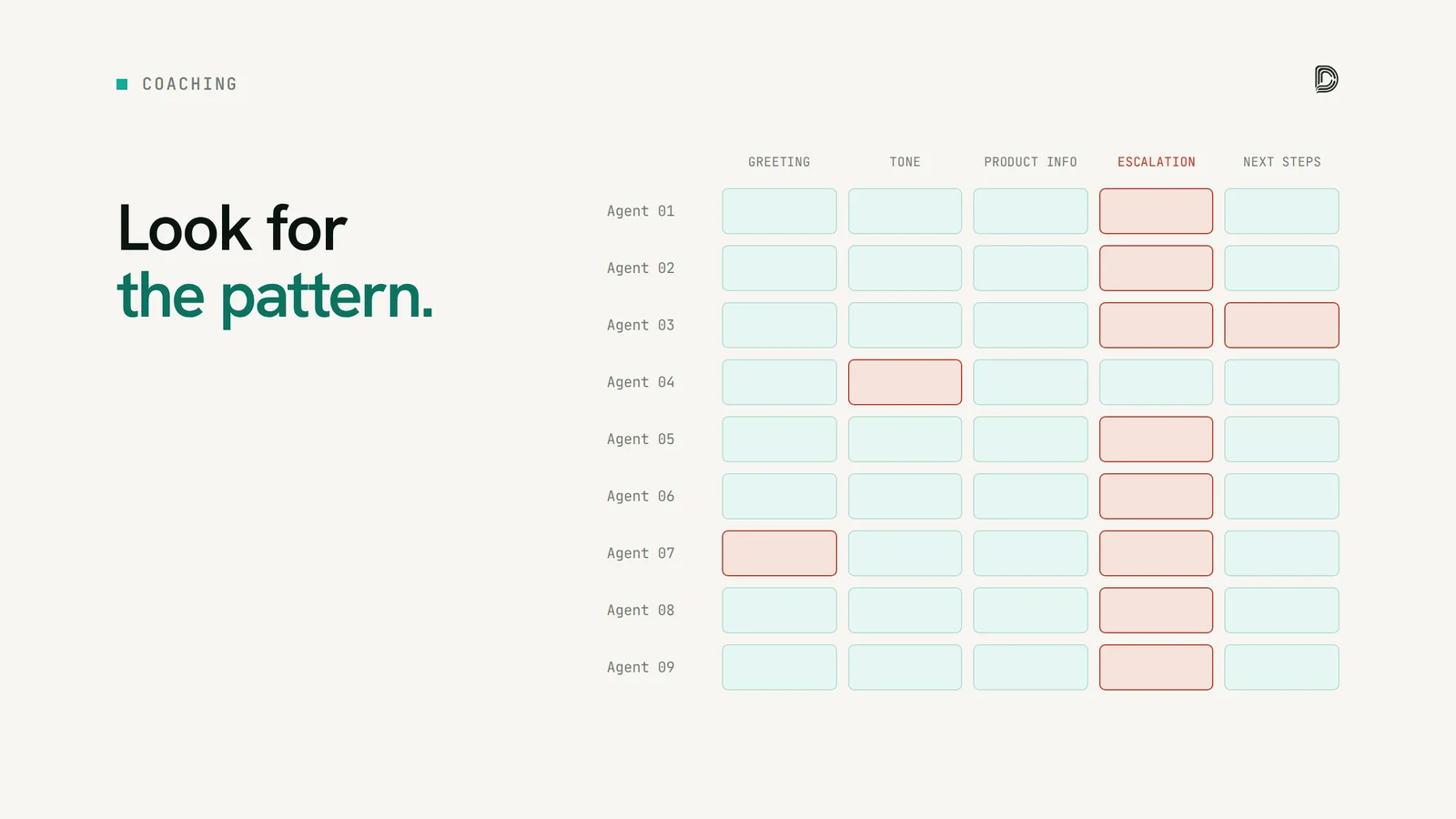
If your team only monitors calls, you’re leaving value on the table. Conversation auditing is the next step after monitoring: a deliberate way to analyze conversations, learn from them and change behavior, not just track performance metrics.
Monitoring vs. auditing: what’s the difference?
Many businesses confuse call monitoring with conversation auditing, but they are not the same. Here’s how they differ:
-
Monitoring is passive; auditing is analytical. Monitoring tracks calls. Auditing digs deeper to uncover patterns and root causes.
-
Monitoring spots errors; auditing identifies trends. Instead of isolated mistakes, auditing finds systemic opportunities for improvement.
-
Monitoring looks at individuals; auditing improves systems. It’s not just about one agent — it’s about improving team-wide performance.
Key areas to audit for better team performance
When conducting conversation audits, focus on these core elements. With Drellia, each one becomes a question in a questionnaire that is applied to every call and chat:
1. Tone and empathy
Did the agent connect emotionally with the customer? Empathy drives trust and satisfaction.
2. Product knowledge
Was the information clear, accurate, and delivered with confidence? Product expertise reduces handling time and improves resolution.
3. Escalation handling
Did the agent manage escalations professionally and de-escalate tension to protect the customer relationship?
Use conversation audits to coach, not punish
Auditing isn’t about catching agents doing something wrong; it’s about coaching them to be better. To maximize results:
-
Pair every audit with actionable, specific feedback.
-
Create personalized coaching plans to support growth.
-
Celebrate wins and recognize top performers publicly. Dashboards by employee and department show who they are.
Example: auditing call transfers
Imagine a contact center where customers are often transferred between departments. Monitoring flags the occasional long call. Auditing asks the same question of every call, such as “Was the customer transferred more than once?”, and shows which departments and call reasons cause the transfers. Fixing that workflow shortens handling time and improves satisfaction far more than coaching one agent at a time.
Conclusion: from watching to learning
Mastery doesn’t come from watching; it comes from learning. By shifting from simple monitoring to data-driven conversation auditing, teams build a continuous improvement loop that:
-
Enhances customer experience
-
Improves agent performance
-
Drives operational efficiency
Investing in conversation auditing today builds a stronger team tomorrow. See how Drellia supports BPOs and contact centers, or book a demo.